
Bangladesh
Since 2006

Bangladesh
Places of intervention


Bangladesh faced escalating humanitarian challenges in 2025, including rapid economic decline, climate shocks, and rising population displacement. Extreme poverty rates nearly doubled in the three years to 2025 (from 5.6 per cent to 9.3 per cent), while overall poverty rose to 28 per cent, largely due to factory closures and job losses, especially among women.
An estimated 16 million people were classified as IPC Phase 3 (Crisis) or above, with the worst-affected being Rohingya refugees and host communities in Cox’s Bazar. Acute malnutrition also rose, with 1.6 million children under the age of 5 suffering from wasting, including 143,850 cases of severe acute malnutrition across 18 districts. In Cox’s Bazaar, poor access to safe water and sanitation, both in camps and host communities, further increased health and hygiene risks.
Action Against Hunger supports refugees and vulnerable populations in climate change affected districts including Cox’s Bazar, Kurigram, Sunamganj, Sylhet, Satkhira, and Barguna. Our work focuses on nutrition; primary healthcare (including sexual and reproductive health); WASH; FSL; climate-resilient agriculture; MHPSS; and emergency response. It also supports local disaster management committees, strengthens locally led anticipatory action systems using artificial intelligence, and promotes the rights of women and girls by making local services responsive to their needs.
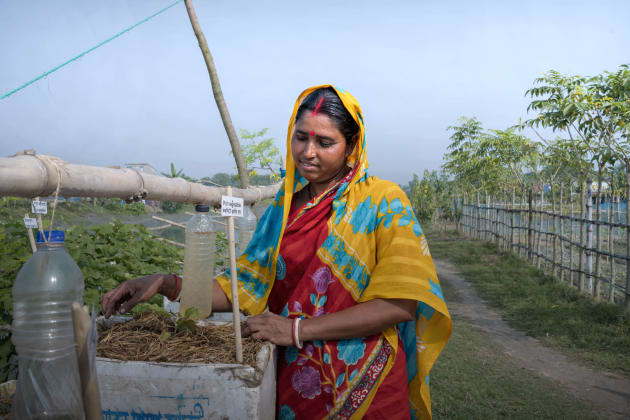
In Cox’s Bazar, Action Against Hunger delivered lifesaving nutrition and WASH services for Rohingya refugees and host communities, alongside maternal, infant, and adolescent healthcare. In Satkhira and Barguna, our climate-adaptive livelihood programmes helped households enhance food production, diversify income sources, and strengthen resilience to recurrent cyclones and tidal flooding.
We also led innovative initiatives such as SURF-IT: a surge forecasting model using artificial intelligence combined with local knowledge to provide early weather warnings and prompt timely action. Collectively, these interventions worked to protect the most vulnerable while reinforcing long-term resilience to hunger, climate impacts, and economic shocks.


Follow the country’s social media accounts !
-

24 February 2025
-
22 December 2021

