
Featured news
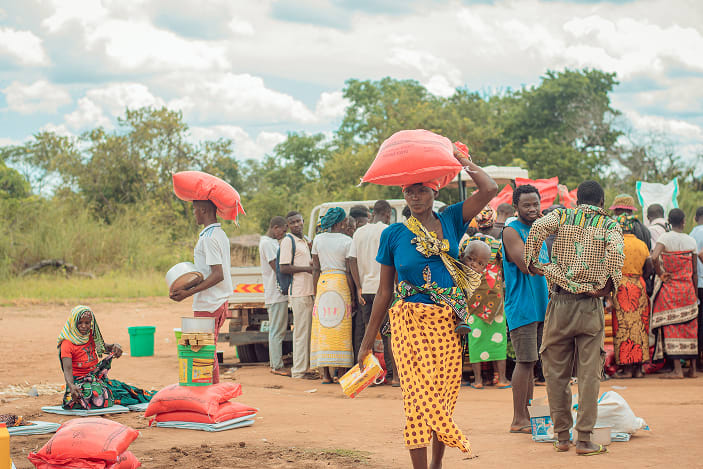
In northern Mozambique, Action Against Hunger is providing vital aid to local communities
Conflicts, population displacement, extreme weather events and epidemics: Mozambique is facing multiple crises. In response to this situation, Action Against Hunger and its partners are running an emergency project to meet the most urgent needs.
Mozambique is facing a multidimensional crisis, fuelled by the conflict in the Cabo Delgado region, which is spreading into the neighbouring provinces of Niassa and Nampula. Recurring climate-related disasters are compounding this problem: three consecutive cyclones struck the north of the country (the provinces of Cabo Delgado and Nampula) in 2025, and heavy rains in 2026 damaged the homes and livelihoods of an already vulnerable population in this area. The southern and central regions are also regularly affected by these extreme weather events.
Persistent insecurity is leading to population displacement. Many families are forced to flee their homes, which undermines their livelihoods and significantly increases food needs across the country. According to the latest estimates, between 1.5 and 2 million people will require food aid between November 2026 and January 2027, due to the cumulative effects of the conflict, the deterioration of food stocks and climate-related shocks on food security.[1]

In partnership with NRC, Solidarités International, Save the Children, and national partners such as Pronanac and FDC (Fundação para o Desenvolvimento da Comunidade and with financial support from the European Commission’s Directorate-General for Humanitarian Aid and Civil Protection ( , DG ECHO) , as well as from SIDA (Swedish International Development Cooperation Agency) and the CDCS (Crisis and Support Centre of the Ministry of Foreign Affairs), Action Against Hunger is leading an emergency operation known as the ‘Rapid Response Mechanism’ (RRM) to address the needs of the people of Cabo Delgado.
Building on a strong presence and high level of acceptance on the ground, this initiative combines life-saving interventions with efforts to strengthen preparedness, coordination and operational capacity.
“This response addresses three types of emergency: conflict-related displacement, climate-related disasters and epidemics.”
Depending on the alerts, and over a 90-day period, NGOs divide up the operations according to their areas of expertise: the distribution of vouchers enabling people to obtain goods and services in kind; access to water, sanitation and hygiene (WASH); the distribution of shelter and non-food items (NFIs); and support in the areas of health, nutrition, protection and education.
“The added value of this multi-sectoral emergency response is that families affected by the crisis benefit from a range of support measures rather than isolated services, which they can prioritise themselves according to their needs,” explains Mathilde Casabonne, deputy area coordinator for Action Against Hunger in Mozambique.
Working in conjunction with local authorities, the consortium brings together international and national organisations that have a complementary and long-standing presence in northern Mozambique, particularly in Cabo Delgado.
“The partners pool their in-depth knowledge of the field, their emergency response capabilities and their community networks.”
Care delivered as close as possible to the communities

Within the consortium, Action Against Hunger is prioritising the distribution of vouchers to help people meet their basic needs. Alongside this support, the NGO assists the most isolated communities by supporting mobile health teams managed by the Mozambican Ministry of Health. These health teams provide healthcare directly to the heart of the most hard-to-reach communities, in areas where healthcare provision is severely limited or barely functional.
Saquina Da Rosaria Quinhas Liberato Massalonga, head of the Health and Nutrition component of the RRM project, explains:
“At the start of the year, a cholera outbreak was declared in the district of Mecufi, and we observed that the district was facing major difficulties in providing care for the population. The hospitals in Mecufi were understaffed, and healthcare professionals were unable to meet the population’s needs. We therefore identified this shortfall and deployed the mobile teams to address it.”
“We have seen changes: we hardly come across any cases of diarrhoea or vomiting during our visits. We have also noticed a change in behaviour: people now know when to wash their hands. These are significant changes that we are observing within the communities.”
To tackle this cholera outbreak, which was declared from November 2025 to June 2026 in the districts of Metuge, Montepuez, Pemba, Mecufi, Balama and Namuno, Action Against Hunger has actively responded to the emergency through water, hygiene and sanitation activities (rehabilitation of water points, disinfection of affected households and health centres, as well as health and nutrition support via mobile teams and training for healthcare staff).

Daniel, a beneficiary of the care provided by the mobile brigade, says:
“I’m very happy with this new hospital, because before we had to go to Mecufi, whereas now it’s right here in our village. We used to have to pay 10mt for a canoe to cross over and get to town for treatment. People, including pregnant women, would cross at night; people would fall into the water – it’s very dangerous.”
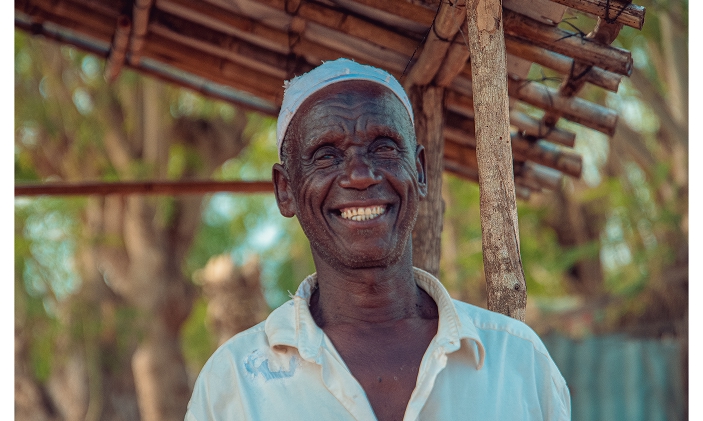
From Chido to El Niño: coping with the effects of climate change
With a succession of tropical storms and cyclones – Chido, Dikeledi and Jude – during the 2024–2025 season, as well as historic flooding in early 2026, Mozambique is no stranger to the effects of climate change. The RRM project also helps to address these challenges.
“Throughout 2025, we carried out operations not only in areas affected by conflict, but also in those affected by Cyclone Chido. We were able to provide assistance to more than 5,000 families affected by the cyclone in the districts of Metuge and Mecufi.”
This was the case for Anfai Abudala, a farmer living in the community of Nanlia, a small village which, like many others in the region, was severely affected by Cyclone Chido. Before the disaster, he and his wife worked together in their field, growing maize and beans — crops that ensured the family’s food security and provided them with a small income.
Their lives were turned upside down by the cyclone:
“When the wind blew our roof off, we were left with nothing to keep us warm. We were sleeping on the damp ground, in the cold, and the children were crying a lot,” said Anfai.
The trauma was not only physical but also psychological: uncertainty about the future, a sense of helplessness and the fear of being unable to protect his family left a deep mark on that time.
Thanks to support from Action Against Hunger, Anfai was able to obtain a range of essential items: rice, beans, vegetable oil, sardines and biscuits, as well as a tarpaulin to cover the house, buckets for storing water and capulanas (a traditional South African wrap) for the women.
“When I received the kits, I felt that someone cared about us. It was as if a helping hand had lifted us up,” he said.
In early September, Mozambique’s National Institute for Disaster Management ( INGD ) stated in a press release that the El Niño phenomenon could reach one of the highest intensities recorded since 1950. Significant rainfall deficits are expected between October 2026 and May 2027, which will increase the risk of drought in several provinces.
“El Niño increases the risk of drought in the centre and south of the country, and we expect the cyclone season to begin earlier than in previous years. For the time being, we are monitoring the situation closely and analysing the risks, in collaboration with our partners,” explains Mathilde.
To date, the 2026 Humanitarian Needs Response Plan (HNRP)[2] has only been 43 per cent funded out of the $534 million required to address the crisis. This funding shortfall jeopardises the ability of humanitarian actors to respond to the worsening crisis and highlights the urgent need to mobilise new resources to implement preventive measures and limit the expected consequences of El Niño.
[1] https://fews.net/southern-africa/mozambique
[2] OCHA: Humanitarian Snapshot July 2026: https://reliefweb.int/report/mozambique/mozambique-humanitarian-snapshot-july-2026-enpt
-

08 July 2026
-

23 December 2024


